Books
01
The Eternal Cafe
A lost man. A hidden sanctuary. A timeless wisdom that could change everything.
Adrian, a 32-year-old software engineer, has hit a dead end. Laid off from his high-paying tech job, he spends his days doomscrolling, endlessly consuming news, social media, and job boards—drifting in a world where digital noise drowns out meaning.
Then, one night, he stumbles upon The Eternal Café, a vintage 1960s-style roadside diner with a flickering neon sign and an atmosphere untouched by time. Inside, he meets Micah, a sharp-witted former British SAS soldier with a cryptic past and a tattoo that reads “Who Dares Wins.” Over a strong “cuppa Joe,” Micah introduces Adrian to Stoic philosophy, offering a new way to see the world—one rooted in resilience, purpose, and control over the uncontrollable.
As Adrian returns to the café, he encounters a retired professor who debunks conspiracy theories with humor, a jazz musician who speaks in riddles, and a poet who only communicates in haiku. Each visit pulls him further from the grip of the digital void and deeper into a journey of self-discovery.
But who really is Micah, and what is the true purpose of the Eternal Café?
Blending modern existential struggles with ancient Stoic wisdom, The Eternal Café is a thought-provoking novel about reclaiming presence, finding clarity in chaos, and embracing the art of living.

02
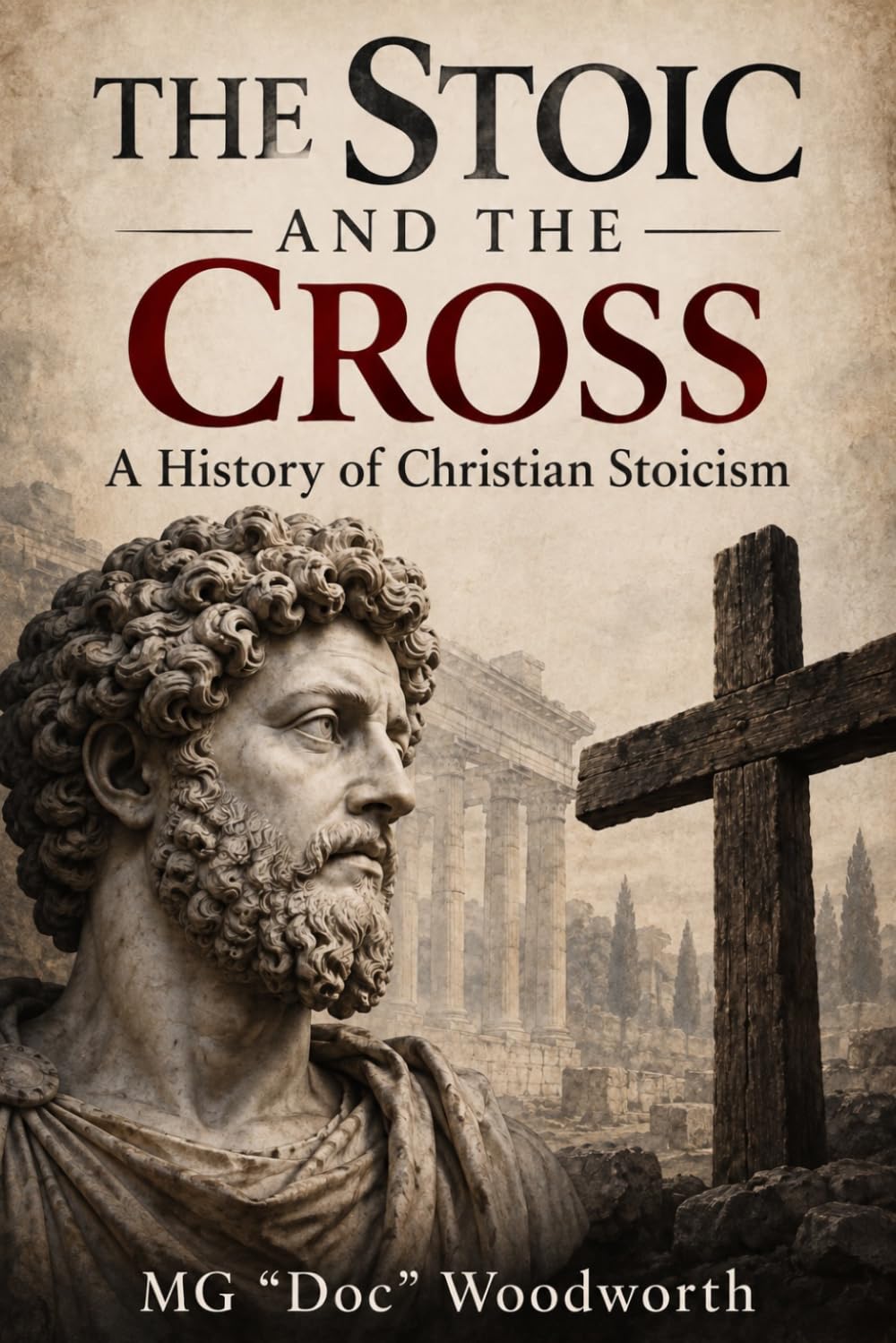
The Stoic and the Cross
A History of Christian Stoicism
Why does a pagan emperor who died in AD 180 sound so much like the Sermon on the Mount?
Marcus Aurelius is on the bestseller table. Seneca is quoted in sermons. Epictetus is recommended by therapists and football coaches. The Stoics have returned, and many of their readers are Christians—or wondering whether they should be. Some find a discipline their churches never taught them. Others are troubled by how familiar it sounds. Pastors offer a familiar warning: this is a fine philosophy, but it must not be confused with the faith.
They are right. They are also two thousand years late.
The Stoic and the Cross follows the two-thousand-year conversation between the philosophy of the Painted Porch and the faith of the cross. Beginning with a shipwrecked merchant’s son in Athens around 300 BC and ending with a seminary professor writing in 2026, it tells the story through real lives: a water carrier who wrote a hymn, a millionaire who taught poverty, a slave who became an influential teacher, and an emperor writing to himself beside the Danube. Along the way come Paul, desert monks, medieval scholars, Calvin, a Navy pilot in a North Vietnamese prison, and the priest who taught readers to understand the emperor’s notebook.
Written as narrative history, with no footnotes and no Greek required, this is the story of what the church borrowed, what it changed, and what it refused. Christians took up the examined day, the anticipated loss, and the watch over the mind. They refused the claim that the soul is enough on its own. The Stoics said a wise man does not weep. The church said Christ wept.
For Christians who have picked up Marcus Aurelius and wondered whether it was safe, and for readers of modern Stoic books exploring the practice’s roots, this is the history neither has been told.
03
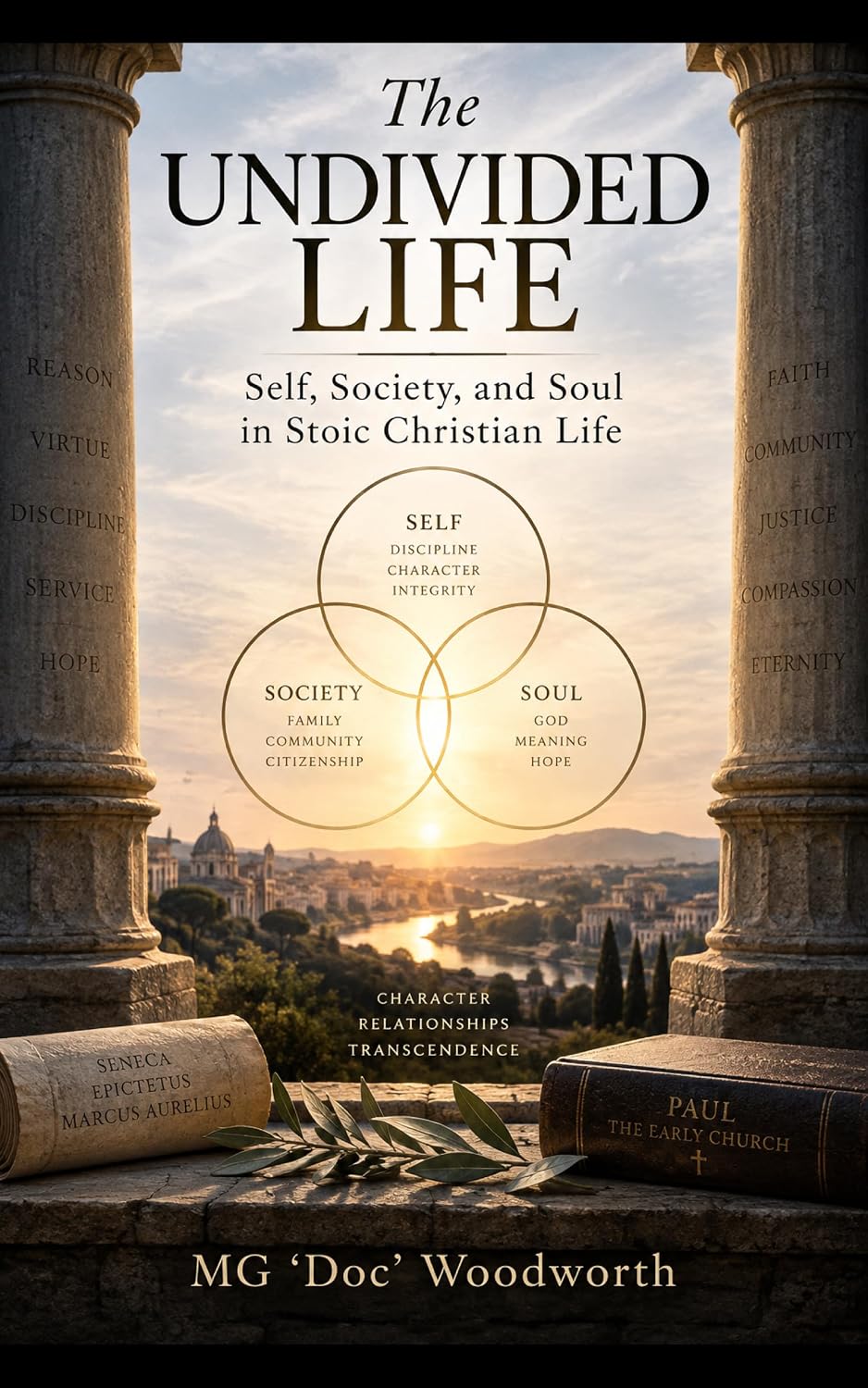
The Undivided Life
Self, Society, and Soul in Stoic Christian Life
You already know more than you live.
You know how you ought to treat the people closest to you, how you ought to handle money and anger and the quiet hours no one sees — and still there’s a gap between the person you believe in and the person you actually are. The ancient Stoics built a whole discipline for closing that gap. They got a remarkable amount right. They also got one enormous thing wrong.
The Undivided Life takes the best of Stoic practice — the watch over the mind, the examined day, the refusal to be ruled by what you can’t control — and sets it under the one thing the Stoics never had: grace. In thirty short, often funny, always honest chapters, it works outward from the inside — self, then society, then soul — toward a life that is finally of one piece.
It won’t make you a Stoic. It will make you harder to divide.
Includes access to a free downloadable study guide for personal reflection or group discussion, and a companion Leader’s Edition and printable handouts.
04
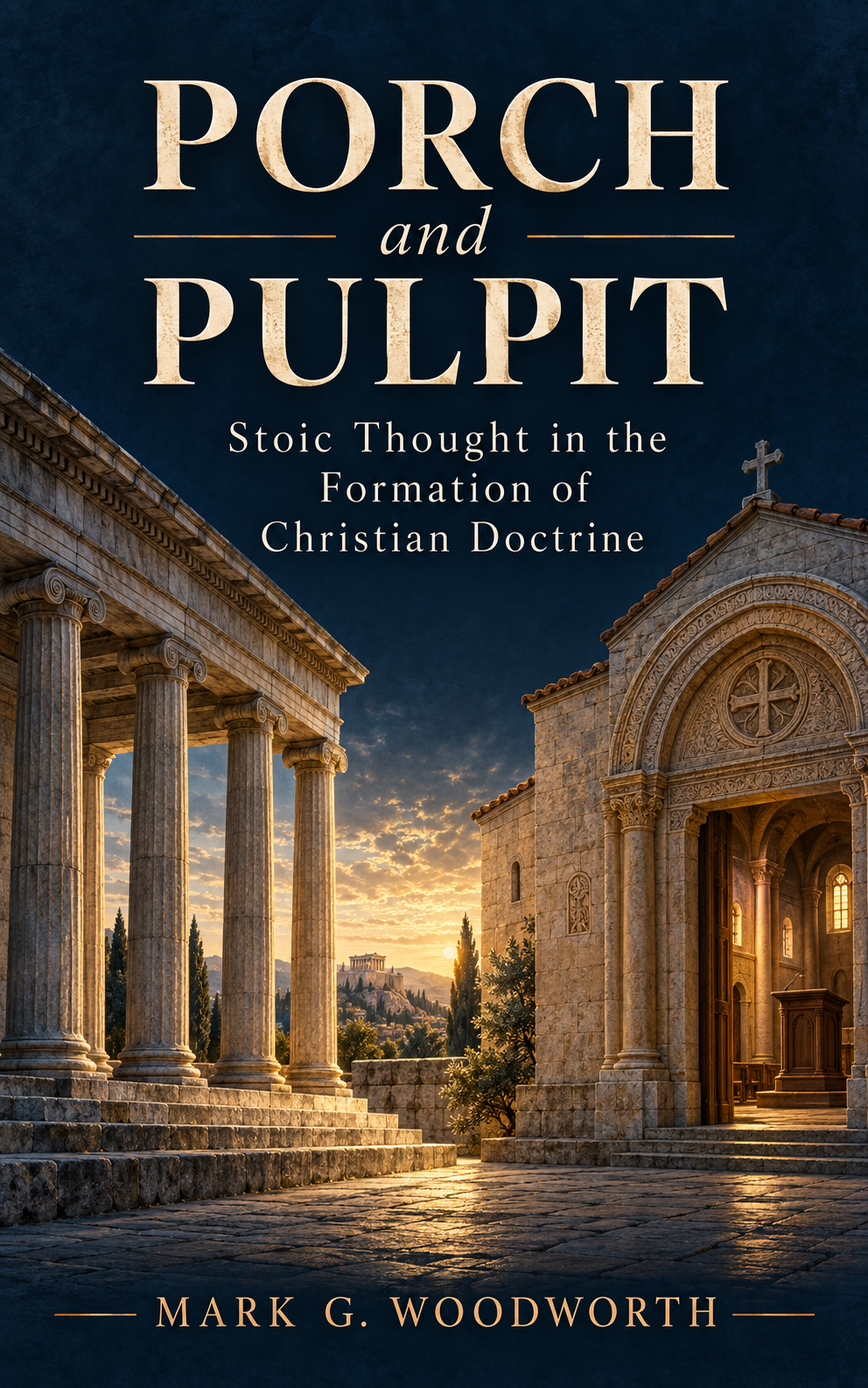
Porch and Pulpit
Stoic Thought in the Formation of Christian Doctrine
By Mark G. Woodworth
What did the church keep from the Stoics—and what did it refuse?
Long before Marcus Aurelius became a modern source of spiritual advice, the philosophers of the Porch and the Christians of the pulpit were neighbors. Their encounters shaped the language of virtue, emotion, providence, and the care of the soul.
In Porch and Pulpit, Mark G. Woodworth traces that relationship across two thousand years, from Zeno, Epictetus, and Seneca through Paul and the church fathers, the medieval tradition, the Reformation, and the modern Stoic revival.
The story turns on a distinction: Christians preserved and transformed Stoic practices of attention, self-examination, and moral discipline while resisting the ideal of the self-sufficient sage. Similar words could carry profoundly different accounts of God, suffering, and human dependence.
Organized in six chronological parts, this accessible intellectual history follows the people, texts, and arguments through which ideas traveled and changed hands. It invites both curious Christians and secular readers of Stoicism to examine a long conversation whose questions remain alive today.
Resemblance is not proof of borrowing. Difference is not proof of non-influence. The history becomes clearer when both are taken seriously.